
The Shape of Becoming
On the quiet transformation that occurs when we stop imposing and start listening—how materials reveal their own nature when given permission.
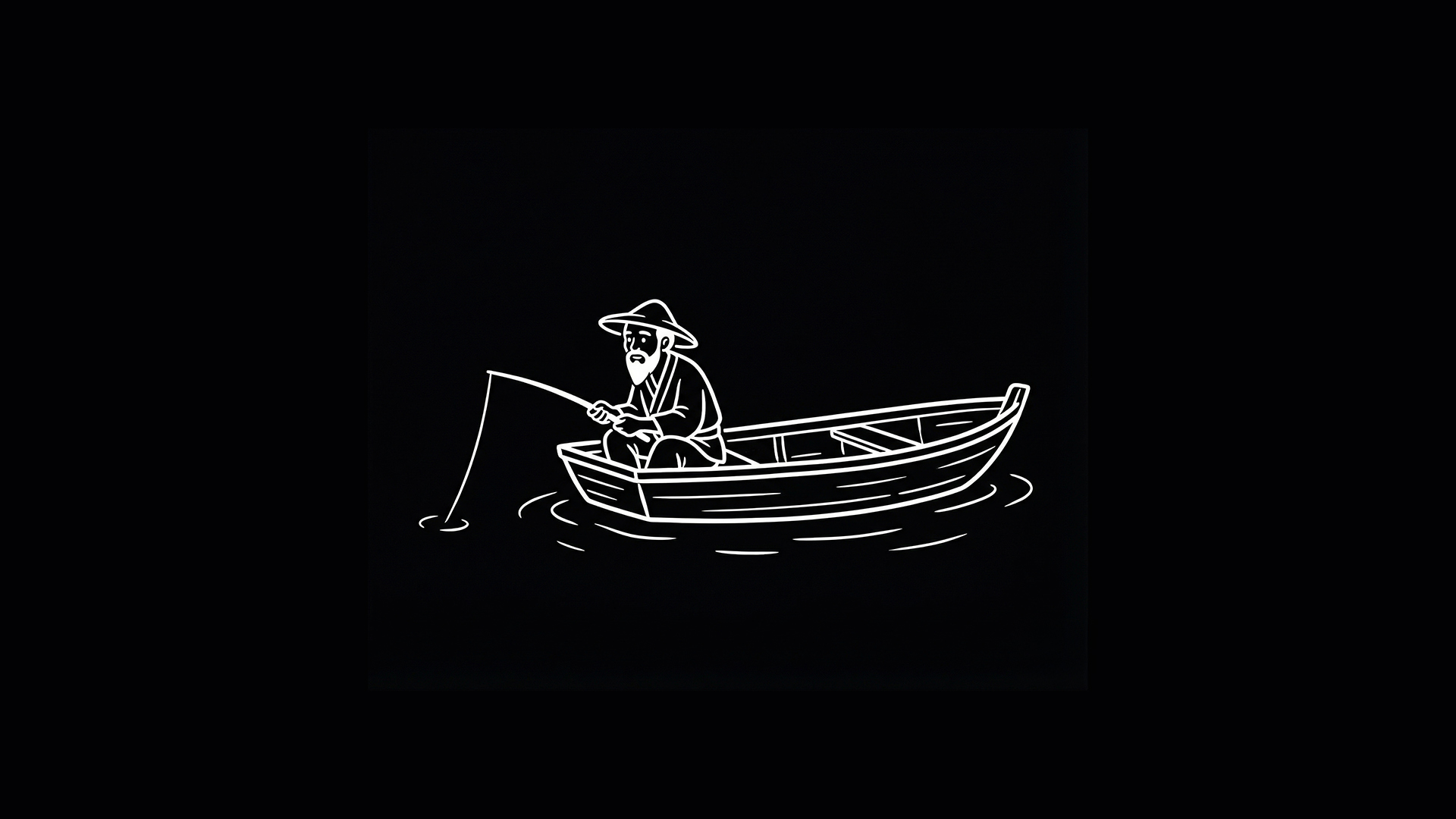
Fishing Alone on a Cold River, Ma Yuan (Song Dynasty)
There is a moment in every act of creation when the materials begin to speak. Not loudly. Not urgently. But if you are still enough to notice, they tell you exactly what they want to become.
The question is whether we listen or impose.
The Two Questions
Every piece of work begins with a question. Usually it is: What do I want this to do?
This question seems natural. We are the makers. The material is passive. We shape it.
But there is another question, quieter and more difficult: What does this want to become?
The shift seems semantic. It is not.
The first question leads to imposition—the will forcing itself onto matter. The second leads to collaboration—the maker and the material moving toward form together.
One produces struggle. The other produces something that already knows how to stand.
What Materials Know
Every material carries its own logic.
Wood has grain. Cloth has drape. Stone has weight. To ignore these properties is to fight the material itself. The struggle is visible in the result—forced shapes, awkward structures, constant maintenance against collapse.
But to work with material is different. The grain guides the cut. The drape suggests the silhouette. The weight determines what the stone can hold.
This is not passivity. It is attention.
The master carpenter does not fight the wood. The master carpenter reads it.
There is no less skill in listening. Often there is more. Imposition requires only force. Alignment requires perception.
Names and Recognition
We believe we assign names. But the truest names are discovered.
A thing already acts as something before we call it anything. It has a nature, a function, a tendency. When we name it accurately, language and behavior align. The name becomes a recognition of what was already true.
When we name it poorly—from habit, from laziness, from the desire to control—a subtle friction persists. The thing resists its own title. We spend energy maintaining a fiction.
The right name is not invention. It is acknowledgment.
Naming is not about claiming. It is about seeing.
The Center and the Edge
There is a pattern that appears across scales: a prominent center supported by quieter margins.
The center does not dominate by assertion. It occupies its place because the edges allow it to. The margins do not disappear. They grant space.
This is not hierarchy. This is interdependence.
┌─────────┬───────────────────┬─────────┐
│         │                   │         │
│  edge   │      center       │  edge   │
│         │                   │         │
└─────────┴───────────────────┴─────────┘
Remove the edges and the center has nowhere to stand. Remove the center and the edges have nothing to support. Each role requires the others for the pattern to cohere.
Balance is not an arrangement. It is a relationship.
What Silence Does
We think of emptiness as absence. But emptiness performs a function that fullness cannot.
The pause between notes is what creates rhythm. The margin around text is what makes reading possible. The silence in a conversation is what allows thought to crystallize into speech.
Silence is not the absence of music. It is what makes music audible.
When we fill every space, meaning collapses into noise. The elements compete rather than compose. We lose the structure that was giving the content form.
Emptiness is not nothing. Emptiness is what allows something to appear.
Subtracting Toward Completion
There is a common confusion: completion is equated with addition.
We assume that finished work has more than unfinished work. So we add features, ornaments, explanations—convinced that each addition brings us closer to done.
But often the opposite is true.
The sculptor does not add marble. The sculptor removes it until the figure appears. The editor does not add sentences. The editor removes them until the meaning stands clear.
Completion is not the point when you can add nothing more. It is the point when you can remove nothing more.
Every unnecessary element is not harmless. It is weight. It obscures. It competes for attention. When it is removed, what remains can finally breathe.
Patience and the Right Moment
There is a patience that appears passive but is not.
The farmer waits through seasons for the moment of harvest. The patience is not inaction—it is attention extended over time. When the moment arrives, the farmer acts. But the farmer did not choose the moment. The farmer recognized it.
This kind of patience feels uncomfortable in a culture of force. We want to control timing. We want to make the moment arrive.
But some moments cannot be made. They can only be noticed.
The question is not when should I act? The question is does this moment belong to action?
Patience is not passive waiting. Patience is active watching.
The Disposition
The way we approach material changes what the material can become.
Approach with imposition and the material resists. The result requires maintenance. It fights against its own form.
Approach with attention and the material reveals. The result sustains itself. It has become what it was already trying to be.
This is not mysticism. It is craft at its most practical.
The impatient maker sees only what they want. The attentive maker sees what is possible.
Every material is waiting to show us something. The only question is whether we are willing to notice.
We do not create forms from nothing. We uncover them. The craft is in the uncovering.